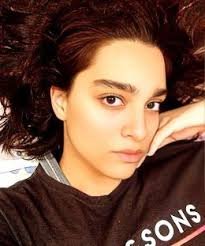
In the quiet corners of her new home in Tehran, 20-year-old Setayesh Shafiei Tafreshi (https://wncri.org/2026/06/04/setayesh-shafiei/) had spent months building something she had longed for her entire life: a personal library of her own. Having grown up without immediate family under the supervision of Iran's State Welfare Organization, Setayesh refused to let the circumstances of her birth define her horizon. To her friends, she was "wildly free"—a fiercely compassionate young woman who judged life on her own terms and never hesitated to challenge the walls built around her.
She was a guard on Tehran's District 6 basketball team, an active judge for the Mehr Book Prize, and a dedicated student preparing for the national university entrance examination. On her Telegram channel, titled "The Girl Who Was the Sun," she poured her deepest reflections on freedom, dignity, and hope into words. Just weeks earlier, on Yalda Night—the Iranian winter solstice celebrating the triumph of light over darkness—she had gotten engaged, ready to begin the future long denied to her.
On the evening of January 8, 2026, that future was stolen by state bullets.
A Final Act of Courage in Khorrasan Square
As nationwide protests swept across Iran in January 2026, Setayesh joined friends near Khorrasan Square in southern Tehran (https://wncri.org/2026/06/04/setayesh-shafiei/). The streets were choked with tear gas and smoke as security forces opened fire on unarmed demonstrators chanting for their fundamental rights.
Moments later, just yards from where Setayesh stood, a 12- or 13-year-old boy was struck by live ammunition and collapsed onto the pavement. Fearing that the child's body would be trampled in the chaos, Setayesh broke away from her friends and ran straight toward him to pull him to safety.
Before she could lift him, security forces targeted her directly. A first bullet struck her leg. As she struggled to stand back up beside the fallen teenager, a second live round hit her in the back (https://www.namesofiran.org/fa/people/setayesh-shafiei-tafreshi). By the time the gunfire subsided and her friends fought their way back to the square, both Setayesh and the young boy had been taken away by security forces.
Forty-Eight Hours of Searching in the Dark
For the next two days, Setayesh's fiancé and closest friends searched desperately from hospital to hospital across Tehran. At 4:00 a.m. on January 10, 2026, staff at a Tehran hospital finally confirmed that an unidentified young woman matching her description had been brought in. Her fiancé was led into the morgue to identify her pale, blood-drained face. She had died from two live rounds fired into her back.
Even in death, the state's bureaucracy added cruelty to grief. Because Setayesh had grown up in the state care system without immediate blood relatives, authorities refused to release her body to her fiancé or friends. Only after her court-appointed guardian from the State Welfare Organization intervened at the Kahrizak Forensic Medicine Center—and formally registered a complaint—were her remains released. When she was brought to Tehran's Behesht-e Zahra cemetery, the crowd of mourners was so large that authorities delayed her burial until January 11, 2026.
Dare to Ask: Will the World Remember Her Name?
Setayesh Shafiei did not die as a bystander; she died in an act of pure humanity, shielding a child she did not even know from the brutality of a regime that fears its own youth. Alongside young women like 24-year-old fitness trainer Saba (Venus) Negahban (https://wncri.org/2026/07/22/saba-negahban-venus/), 19-year-old Setareh Rafiei (https://wncri.org/2026/07/09/setareh-rafiei/), and 30-year-old artist Sahar Bayat (https://wncri.org/2026/07/23/sahar-bayat-was-killed/), Setayesh represents a generation of Iranian women who answered bullets with solidarity.
When the Iranian authorities cut the internet and empty the streets with live fire, they count on international silence. We must refuse to give it to them.
WHAT YOU CAN DO ON :
Say Her Name: Share Setayesh Shafiei's story and photo on social media using #SetayeshShafiei and #DareToAsk so the regime's information blackout cannot erase her memory.
Demand International Accountability: Contact your parliamentary representatives and the UN Independent International Fact-Finding Mission on Iran to demand criminal accountability for the commanders responsible for the January 2026 massacre of unarmed protesters.
Support the Silenced: Explore more stories of Iranian women standing against state violence on our Real Stories page and join our advocacy campaigns at Dare to Ask
