Across the revolutionary courts of Tehran, Isfahan, Rasht, and Bandar Abbas, Iran's judiciary has transformed capital punishment into its primary instrument for suppressing civil society in the aftermath of the January 2026 nationwide protests. Newly compiled data from independent human rights monitors—including the Human Rights Activists News Agency (HRANA), Norway-based Iran Human Rights (IHRNGO), the Center for Human Rights in Iran (CHRI), Human Rights Watch, and the Abdorrahman Boroumand Center—exposes a legal apparatus relying on group trials, coerced confessions, and vague national security charges to place women, students, and peaceful demonstrators on death row.
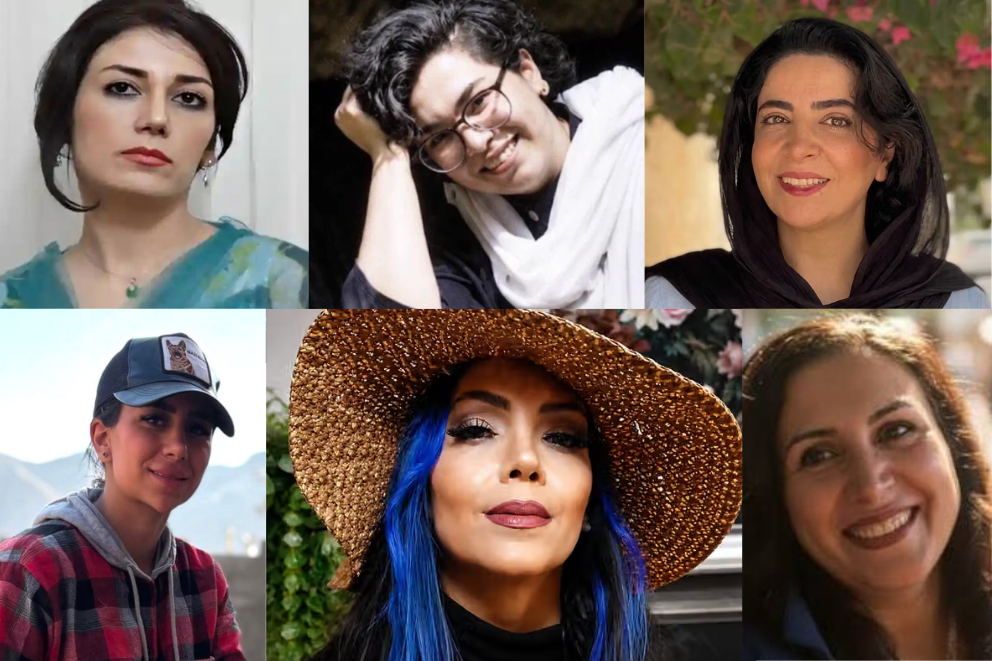
Eight Women Facing Execution in Political, Security, and Protest Cases
According to independent case tracking by HRANA and CHRI, at least eight women are currently under sentence of death in Iranian prisons on political, security-related, and protest charges such as baghi ("armed rebellion"), moharebeh ("enmity against God"), and efsad-fil-arz ("corruption on earth"):
Maryam Hadavand (Evin Prison, Tehran): A 45-year-old mother of two arrested in connection with January 8, 2026 demonstrations in Pakdasht, southeast of Tehran. Sentenced to death by Branch 26 of the Tehran Revolutionary Court while denied access to an independent lawyer of her choosing, she was tried alongside teenage co-defendants aged 17 and 18 whose death sentences have been referred to the Supreme Court.
Leila Abolhasani (Isfahan): A mother of two teenage daughters sentenced to death by the Isfahan Revolutionary Court on a charge of "enmity against God" following her arrest during January 8 protests in Shahin Shahr. Sources close to her family reported to HRANA that her prosecution stemmed from her presence at—and filming of—a shop fire during the demonstrations.
Mahnaz Chardouli (Qarchak Prison, Varamin) & Taraneh Rahimi (Dowlatabad Prison, Isfahan): Both young women were sentenced to death in fast-tracked prosecutions linked to the January 2026 protests—Chardouli on allegations of participating in gatherings and property damage, and 20-year-old Rahimi as one of ten defendants handed death sentences in the 16-person "Isfahan Shohada Square" group trial.
Pakhshan Azizi & Arghavan Fallahi (Evin Prison), Zahra Shahbaz Tabari (Lakan Prison, Rasht), and Sevda (Marzieh) Ebrahimi Shamsabadi (Bandar Abbas): Kurdish humanitarian and social worker Pakhshan Azizi—whose requests for judicial review have been repeatedly rejected by the Supreme Court—remains at imminent risk of execution in Evin Prison alongside Arghavan Fallahi. In Rasht's Lakan Prison, 68-year-old engineer Zahra Shahbaz Tabari was sentenced to death for a second time following a retrial, while 32-year-old Sevda Ebrahimi Shamsabadi was sentenced to death in Bandar Abbas on charges that included sending photographs to Persian-language media abroad.
691 Verified Executions in Ten Months—85 Percent Carried Out in Secret
The death sentences against women political detainees are unfolding within a broader surge in state killings that affects the country's most marginalized populations. In its November 2026 monthly assessment, Norway-based Iran Human Rights (IHRNGO) confirmed at least 77 executions in October alone, bringing the verified total for the first ten months of 2026 to at least 691 executions—including 23 women, 36 protesters, three juvenile offenders who were under age 18 at the time of their arrest, and 123 members of ethnic minorities (64 Baluch, 44 Kurdish, and 15 Arab citizens).
Crucially, IHRNGO's two-source verification reveals that only 100 of the 691 executions recorded between January and October 2026—just 14.5 percent—were announced by official judicial or state media outlets. The remaining 591 hangings were carried out in secret.
Fast-Tracked Group Trials, Persecuted Lawyers, and Minorities Targeted
A joint investigation by Human Rights Watch and the Abdorrahman Boroumand Center, alongside legal analyses by the Center for Human Rights in Iran (CHRI), highlights how Iranian courts have systematically dismantled basic fair-trial guarantees:
Executions Without Allegations of Killing: In more than half of the protest-related executions examined by Human Rights Watch and the Boroumand Center, authorities did not even allege that the defendants had killed anyone, instead imposing death sentences for blocking streets, damaging public property, or sending footage abroad under Iran's expanded 2025 Espionage Law. Some trials took scarcely five weeks from arrest to execution.
Arrest of Defense Lawyers & Crackdown on Minorities: The Boroumand Center documented the arrest of at least 19 defense lawyers in the month following the January uprising to prevent detainees from securing independent legal counsel. Simultaneously, HRANA documented that at least 118 Baha'i citizens—60 of them women—were subjected to arrests, prison terms, and property confiscations across 11 provinces over a seven-month period between March and October 2026, while teachers' union activist Mahnaz Ebrahimi was arrested in Shiraz and transferred to Adelabad Prison.
As 46 UN member states and UN Special Rapporteur Dr. Mai Sato have emphasized before the Human Rights Council and General Assembly, any diplomatic engagement with Tehran must place an immediate moratorium on the death penalty and the release of political detainees at the top of the international agenda.
